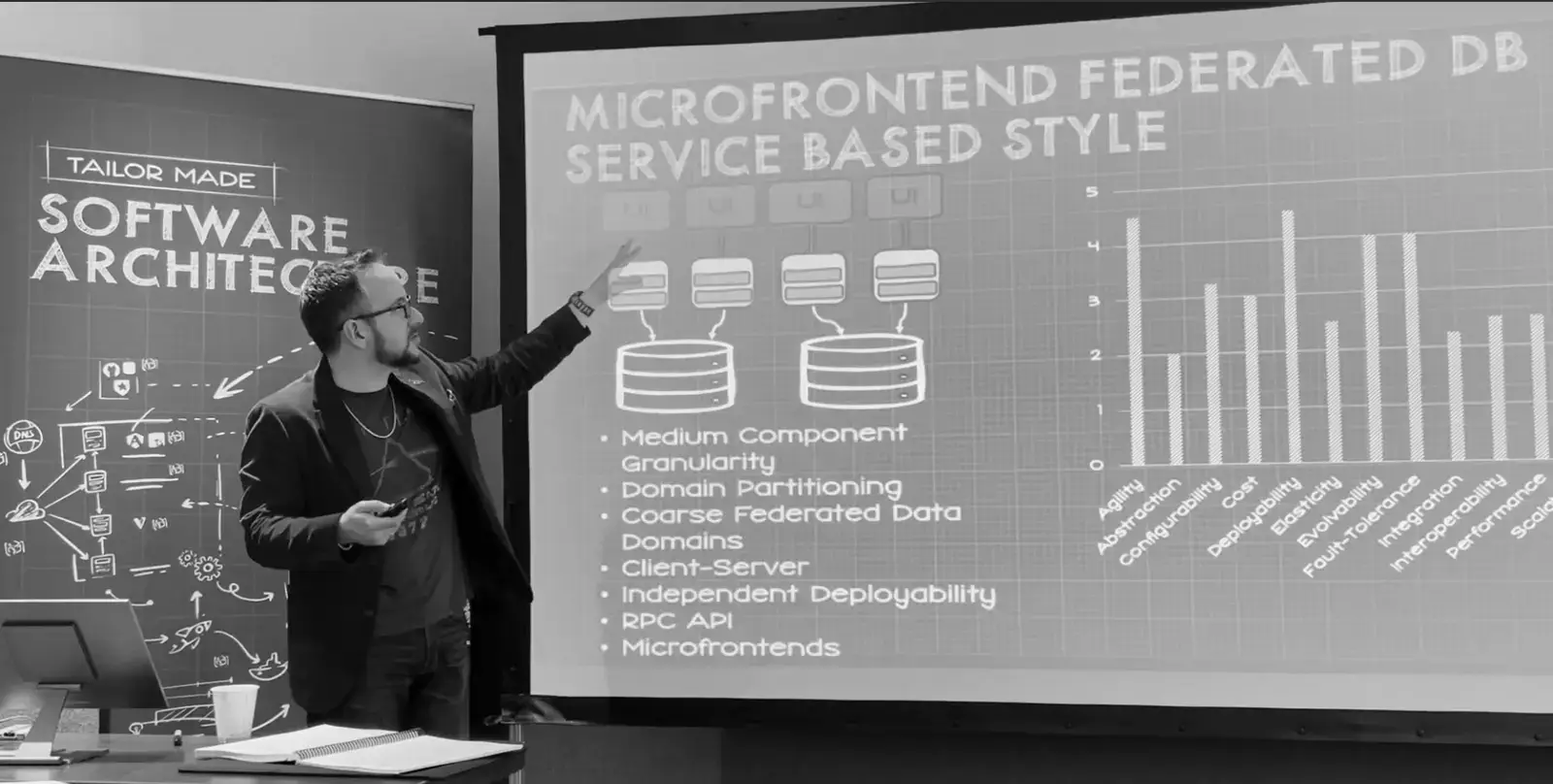
Learn by building the real thing.
Facts have a shelf life; a mental model compounds. Every workshop I run is built so the idea is felt before it’s named, then practiced until it’s yours. You leave with working software, an understanding of why it works, and a vision for what follows.
Two ways to learn.
Your team, your systems, your problem.
Built for the room that’s actually there. Your people work on your own code and data, so the exercises become the foundation of the real system. Two deliverables, always: the work, and the thinking that produced it.
Open seats, small rooms.
Hands-on cohorts at conferences and online, small enough that everyone builds.
Upcoming cohorts.
Architecting the Semantic Layer
Why AI can’t tell truth from probability in your data, and how to build the layer that fixes it: the standards stack, context in the data itself, and adding semantics to the systems you already run.
Designing a Semantic Layer
A working session, not a survey. You’ll leave able to judge whether your own systems are agent-ready, argue the case to your team, and start adding a semantic layer to systems you already run, this week.
A decade learning how this clicks.
The semantic stack has a reputation for being hard to teach. It took me years of getting it wrong to learn why: people were handed the vocabulary before they’d felt the problem it solves. So I reversed the order. You meet the problem first, in something you can touch; the name arrives when it has something to attach to.
It’s the same way a magic trick works on an audience, and it’s why people leave able to teach it to their teams. That’s the real measure.
Bring a workshop to your team.
Tell me what your team is building and where they’re stuck.